
Retail EHS Trends & Insights From the 2026 APTIM Retail Leadership Summit
Retail environmental, health, and safety (EHS) leaders are managing increasing regulatory complexity, operational pressures, and rapid technology adoption. Discussions at the 2026 APTIM Retail Leadership Summit highlighted how organizations are adapting environmental compliance, sustainability, and risk management programs to meet business demands.
This Week's Contributor

What became clear early in this year’s Retail Leadership Summit is that retail environmental, health, and safety (EHS) leaders face many of the same operational and regulatory challenges. Organizations are being asked to manage increasing risk with fewer resources, while navigating expanding delivery expectations, financial pressures, and growing demands for clearer, more actionable data.
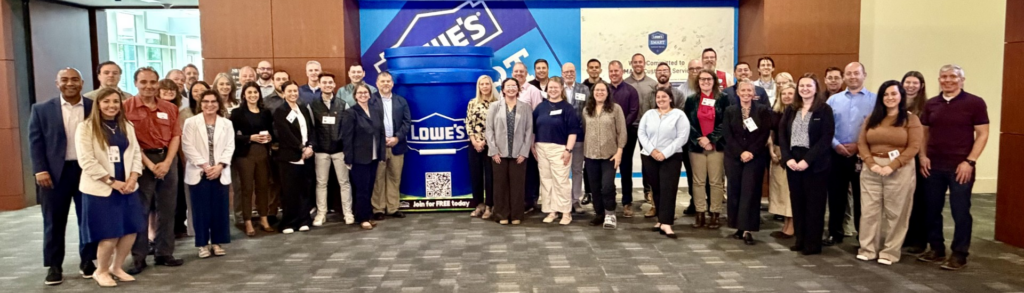
The 2026 Retail Leadership Summit brought together EHS leaders from 21 national retailers, including more than 50 participants to exchange insights, challenge assumptions, and discuss how programs are evolving in real time. Together, participants explored trends in environmental compliance, workplace safety, sustainability, data management, digital solutions, fire safety, and product compliance. One theme emerged consistently throughout the summit: traditional EHS management approaches are shifting as organizations work to align environmental, safety, and sustainability programs more closely with broader business objectives.
Managing Regulatory Risk Across Retail Operations
This session highlighted how rapidly expanding regulatory expectations are reshaping risk ownership across the retail sector, particularly regarding emerging issues such as PFAS and extended producer responsibility (EPR). Discussions focused on how state-level programs continue to advance while federal rulemaking develops more slowly, creating operational complexity for retailers operating across multiple jurisdictions.
Participants described a growing patchwork of state PFAS requirements, with inconsistent standards and evolving compliance expectations creating uncertainty for organizations attempting to plan long-term strategies. EPR programs present similar challenges, particularly as states and regulators continue developing frameworks that assign responsibility across complex supply chains.
One participant noted that the complexity of packaging hierarchies and producer definitions may ultimately result in retailers being treated as the de facto responsible party, increasing exposure to compliance obligations and product restrictions tied to upstream supplier decisions.
At the same time, product-level regulatory risk, particularly surrounding pesticides and chemical compliance, is exposing gaps in data, management systems, and ownership models. Participants discussed increasing enforcement pressure and product pulls associated with classification controls, while also highlighting ongoing challenges in defining organizational responsibility to vendors and manufacturers.
Many organizations are responding by investing in more centralized compliance management systems, improving regulatory tracking processes, and strengthening cross-functional collaboration. Without centralized tracking and clear ownership, retailers may face inconsistent compliance decisions, delayed responses, and increased enforcement risk.
AI & Emerging Technologies in Retail EHS Programs
Alongside regulatory complexity, artificial intelligence (AI) and emerging technologies are reshaping how EHS programs operate. One of the clearest takeaways from this year’s summit was how quickly organizations have moved from evaluating AI capabilities to implementing them within existing operations.
Retailers shared examples of AI applications across several areas of EHS program management. Organizations are using AI to evaluate workplace conditions, identify safety risks, support camera-based behavioral monitoring systems, and automate portions of job hazard analyses. Others are applying AI to administrative and compliance-focused tasks, including summarizing asbestos surveys, identifying inspection trends, and reviewing lease agreements for environmental obligations.
Despite growing adoption, participants consistently emphasized that technology is intended to support, not replace technical expertise and operational judgment. As one retailer stated during the discussion, “You still need people to drive the car; it will not drive itself.” For retail EHS teams, the value of AI depends on whether it improves decision-making, reduces administrative burden, and strengthens risk visibility.
Organizations realizing the greatest value from AI implementation are integrating these tools into existing operational workflows rather than treating them as standalone solutions. Participants noted that AI is proving most effective when used to reduce administrative burden, improve data evaluation, and allow EHS teams to focus more directly on risk management and strategic decision-making.
This discussion reinforced that AI will continue to influence how retail EHS programs operate, particularly in areas involving data management, compliance tracking, and operational efficiency.
Operational Challenges Across Retail EHS Programs
Additional summit discussions focused on stormwater compliance, sustainability initiatives, fire safety, waste minimization, and workplace health and safety programs; areas where retailers are balancing compliance obligations with day-to-day operational realities. Participants emphasized the importance of collaboration across internal business functions to build and sustain effective EHS programs in increasingly complex operational environments.
Several conversations also focused on long-term planning and how retail EHS programs may evolve by 2030. Discussions explored how organizations can prepare now for increasing regulatory demands, changing operational expectations, and continued technological advancement.
One of the most consistent themes throughout the summit was the value of open, peer-to-peer dialogue. Participants openly discussed what is working within their organizations, where challenges remain, and how decisions are being made in real time.
The participating organizations represented a broad cross-section of the retail sector, each navigating similar pressures from different operational perspectives. The willingness to share practical experiences created a level of transparency and collaboration that is often difficult to achieve outside of dedicated industry forums.
Preparing Retail EHS Programs for the Future
Looking ahead, the future of retail EHS programs will be defined by how effectively organizations adapt to ongoing operational, regulatory, and technological change. Regulatory fragmentation will likely continue to expand, data volumes will increase, and technology adoption will continue to accelerate.
Organizations positioned for long-term success are already integrating EHS considerations into broader enterprise decision-making processes, leveraging technology strategically, and using data to prioritize operational and regulatory risk. Equally important is maintaining strong industry networks that allow organizations to share insights, benchmark approaches, and respond more effectively to emerging challenges.
As retail organizations balance compliance, sustainability, operational performance, and risk management, collaboration and information sharing will remain critical components of effective EHS leadership.
Connect With APTIM at the 2027 Retail Leadership Summit
If your organization is navigating increasing regulatory complexity across multiple states, evaluating the role of AI and emerging technologies within EHS programs, or seeking stronger benchmarking and collaboration opportunities with industry peers, APTIM invites you to join the 2027 Retail Leadership Summit.
APTIM works with retail organizations to support environmental compliance, sustainability strategy, operational risk management, data management, and program implementation across multi-site operations.
Learn more about APTIM’s Environmental Retail Index and contact EnvironmentalRetail@APTIM.com with interest.
Published May 2026
APTIM. In Pursuit of Better.
Connect with APTIM
Subscribe to the APTIM Xchange Newsletter
APTIM's newsletter, The APTIM Xchange, provides industry news flashes, regulatory updates, service spotlights, and topical columns from our subject matter experts.