
EPA Approves New Fluorinated Pesticides: Understanding “Forever Chemical” Concerns
Environmental professionals, regulators, and communities are paying close attention as the EPA has approved a new class of fluorinated pesticides. Dive into what these approvals mean, whether these compounds qualify as PFAS, and how they may contribute to ongoing concerns surrounding “forever chemicals.”
This Week's Contributor

The US Environmental Protection Agency (EPA) recently approved two new fluorinated compounds, isocycloseram and cyclobutrifulam, as key ingredients in pesticides designed for widespread application on food crops and institutional landscapes, including lawns and golf courses. Two additional fluorinated pesticidal compounds, diflufenican and trifludimoxazin, are likely to receive similar EPA approval in the coming months.
These new fluorinated pesticides are recognized for their potential to address several persistent pests. For example, isocycloseram can target diamondback moths in Brassica vegetables (e.g., broccoli and cabbage), the Colorado potato beetle, and the Asian citrus psyllid. The latter is a primary vector for the bacterium that causes citrus greening disease, which remains a significant global threat to citrus production with limited effective control options.
However, the regulatory approvals have also prompted widespread concern. These compounds are described as new per- and polyfluoroalkyl substances (PFAS), often referred to as “forever chemicals” due to their persistence in the environment. PFAS are known to contaminate soils, waterways, and wildlife, and have been detected in the blood of most Americans. Their presence stems from past and ongoing uses in products such as firefighting foams (aqueous film-forming foam; AFFF), grease-resistant packaging, cosmetics, and other consumer and industrial materials.
While many PFAS are currently being phased out, including those historically used in AFFF, the EPA’s approval of new fluorinated pesticides has raised important questions about environmental persistence, regulatory definitions, and long-term public health impacts.
Chemistry Matters: Are These EPA-Approved Fluorinated Pesticides PFAS?
One of the current debates surrounding the EPA-approved fluorinated pesticides is whether they are considered PFAS at all. Many of the PFAS that are present in the environment from AFFF, and other sources, are highly fluorinated surfactants, consisting of a hydrophobic fluorinated carbon backbone and a hydrophilic head, as shown for perfluorooctane sulfonic acid (PFOS) in Figure 1. These legacy compounds either persist for extended periods in natural environments or transform slowly to shorter-chain PFAS that are highly recalcitrant, thus their “forever chemical” moniker. These compounds have been linked to a wide variety of human diseases.
After significant negative press, the EPA states that these new pesticides are not technically PFAS according to their 2021 definition for safety testing under the Toxic Substances Control Act, where they define PFAS as containing two adjacent fluorinated carbon atoms, one of which must be fully fluorinated. The current suite of fluorinated pesticides does not meet this standard. For example, isocycloseram contains one fully fluorinated methyl group and a non-adjacent singly fluorinated carbon that is part of a benzene ring structure (Figure 2). The other three pesticides mentioned above also do not meet the requirements of the current EPA definition. Thus, according to the EPA, they are not PFAS and will not behave like traditional PFAS.
However, this interpretation runs counter to that accepted by many other organizations, including the Organization for Economic and Cooperative Development, the 2020 National Defense Authorization Act, and more than 24 US states, all of which classify a compound as PFAS if it contains at least one fully fluorinated carbon atom. Under these broader definitions, the new fluorinated pesticides do meet the PFAS criteria.
Why Fluorinated Compounds Are Used in Pesticides Despite Environmental Concerns
It is important to understand that there are a wide variety of fluorinated compounds, including many with US Food and Drug Administration (FDA) approval for human use as drugs. In fact, chemists sometimes replace one or more hydrogen atoms in promising drugs with fluorine (which is of similar molecular size) to alter their stability and longevity in the human body, as well as to enhance activity. In these cases, the addition of one or more fluorine atoms has beneficial effects.
A certain longevity is also critical for the activity of pesticides. Ideally, the compounds persist long enough to kill the pests they are targeting (e.g., insects on food crops), but not long enough to cause significant human exposure (i.e., gone by the time crops are harvested). This presents a narrow window, and many compounds and microorganisms often evolve to biodegrade pesticides at increasingly faster rates, reducing their overall effectiveness.
For this reason, many early pesticides were highly chlorinated compounds (e.g., DDT and dieldrin), which proved difficult for bacteria to biodegrade, like highly fluorinated PFAS such as PFOS. However, these compounds proved to be highly persistent, and most are now banned. It is likely that the addition of fluorine to the base structures of the newly approved pesticides was done, in part, to extend their environmental longevity, though not to the degree of traditional PFAS.
The Bottom Line on EPA-Approved Fluorinated Pesticides and PFAS Risks
Whether or not a new pesticidal compound contains a few fluorine atoms does not necessarily dictate its toxicity or its potential for long-term environmental harm. As designed, the newly approved pesticidal compounds are toxic to a variety of insects. Unfortunately, some data suggest that they are equally harmful to beneficial insects, such as honeybees in the case of isocycloseram.
Prior to approving any new synthetic pesticide, the EPA undertakes a comprehensive review to assess the potential for human and environmental harm, as well as risks compared to other compounds currently on the market. Their conclusion with the current suite of approved fluorinated pesticides is that they “lack the persistence and bioaccumulation properties that are commonly associated with forever chemicals.” Comparing the chemical structures of these compounds with the most common PFAS in AFFF that persist for years or decades, this statement is likely to be correct.
It remains possible that certain daughter products containing the fully fluorinated carbon from each new compound may persist in the environment (e.g., trifluoroacetic acid). However, the current evidence suggests that these EPA-approved fluorinated pesticides are unlikely to behave as “forever chemicals.”
APTIM’s Work in PFAS & Fluorinated Compounds
APTIM has extensive experience in PFAS assessment, remediation, and regulatory compliance. Our team supports clients across federal, state, and local projects to identify PFAS sources, evaluate environmental risks, and implement remediation strategies. We provide solutions for managing fluorinated compounds, helping clients navigate complex EPA regulations and protect communities and ecosystems.
Learn more about APTIM’s PFAS services and how we can help your organization address challenges associated with fluorinated pesticides and “forever chemicals.”
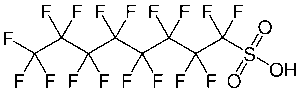
Figure 1. Structure of PFOS with eight perfluorinated carbon atoms and a hydrophilic sulfonate group.
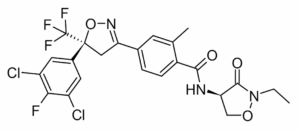
Figure 2. Structure of isocycloseram with one perfluorinated carbon and a second monofluorinated carbon.
Published December 2025
APTIM. In Pursuit of Better.