
Recycling to Mardi Gras: Making Tradition More Sustainable
Mardi Gras generates enormous cultural value for Louisiana, along with significant volumes of waste. Discover how creative recycling programs are reducing environmental impacts while preserving the spirit of celebration.
This Week's Contributor

Implementing Recycling Along Mardi Gras Parade Routes
Large public events present unique waste management challenges, particularly when activities occur across multiple days, routes, and neighborhoods. Mardi Gras, one of Louisiana’s most iconic traditions, exemplifies these challenges while also offering opportunities to integrate sustainability into cultural celebrations. Recycling initiatives implemented along Mardi Gras routes demonstrate how thoughtful planning, community engagement, and operational coordination can significantly reduce waste and protect local infrastructure.
As part of a growing effort to address waste management challenges associated with high-traffic events, APTIM’s Kevin Fitzwilliam was an integral part of bringing a large-scale recycling pilot program to New Orleans’ main Mardi Gras parade route in 2018. The pilot helped demonstrate that recycling infrastructure and public engagement could function effectively even in crowded, fast-moving environments. Strategically placed recycling stations, supported by trained volunteers, made it easier for parade attendees to properly dispose of materials in real time.
Since that initial pilot, the effort has grown each year and evolved into a coordinated, multi-day recycling initiative operating across multiple locations. Now hundreds of workers and volunteers collect aluminum, glass, and unwanted Mardi Gras throws from parade attendees who bring the items to dozens of recycling stations over four days. These stations provide accessible disposal options to prevent materials from entering landfills or storm drains, supporting local infrastructure protection and reducing post-event cleanup demands.
Public-facing engagement is a key component of the program’s success. You can find Kevin dressed as Canny the Clown during these events, collecting recyclables and promoting environmental sustainability in character. “I want to create memories with people so that they associate environmental stewardship with fun. Being in a silly costume is part of that,” Kevin said. This approach reflects a broader strategy of meeting people where they are and reinforcing recycling behaviors in ways that align with the celebratory atmosphere of Mardi Gras.
Last year alone, the recycling initiative prevented 75,000 pounds of materials from entering a landfill or storm drainage system. These outcomes demonstrate how targeted recycling programs, supported by volunteers and community participation, can significantly reduce waste at large public events and protect critical urban infrastructure.
In addition to staffed recycling stations, Kevin participates in a costumed recycling krewe known as the Re-Cyclists. As one of 40 recycling superheroes, he marches in a parade collecting aluminum cans as muscleman Hans Can Crusher alongside fellow Re-Cyclists such as Marie Cantoinette. The team’s presence aligns sustainability messaging with the festive nature of Mardi Gras, reinforcing recycling behaviors and normalizing environmentally responsible actions during large celebrations.
Reducing Waste at the Source Through Sustainable Parade Throws
Recycling is only one component of event sustainability. Mardi Gras sustainability efforts increasingly focus on reducing waste at the source by rethinking traditional parade throws. Mass-produced plastic beads, while iconic, are often discarded shortly after parades and contribute to long-term waste management challenges.
Kevin promotes alternatives to these disposable items by encouraging parade “catches” that are designed to be kept. In 2017, he created Atlas Beads, through which he sells necklaces, bracelets, coin purses, and earrings made from magazine paper by women in Uganda. His goal is to promote Mardi Gras throws that are handcrafted, fashionable, and durable, offering recipients something meaningful rather than disposable.
Float riders and parade marchers have thrown the necklaces and bracelets adorned with a “Handcrafted Mardi Gras” tag, which explains how the items were made. Efforts like Atlas Beads support reuse, extends product lifespans, and reduces waste generation while maintaining the excitement and tradition of parade throws. By shifting expectations around what constitutes a desirable catch, sustainable parade throws help reduce overall material volumes entering the waste stream.
Integrating Art and Sustainability
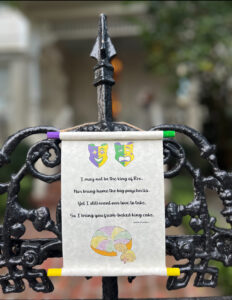
Creativity and self-expression are central to Mardi Gras, and sustainability initiatives increasingly reflect that reality. This year Kevin has added to his overall Mardi Gras sustainability efforts by creating Mardi Gras postcards as well as individually crafted scrolls consisting of his own sketches and poems. Kevin credits much of his own creativity to Mardi Gras and its emphasis on artistic freedom.
“To me, the true spirit of Mardi Gras is that it gives you an outlet for whatever form of artwork you enjoy producing. I’ve created characters, poems, and sketches all due to Mardi Gras. I want to help promote the idea that Mardi Gras’ carefree attitude doesn’t have to equate being irresponsible toward the environment,” Kevin said.
Kevin’s postcards and scrolls are being thrown by riders in parades, along with temporary tattoos featuring his artwork. Kevin partnered with a temporary tattoo company to print thousands of tattoos derived from his artwork: “I took my drawings of whimsical Mardi Gras characters and converted them to 2-by-2-inch temporary tattoos. I love the idea that artists can create throws for parades.”
These lightweight, low-waste items offer an alternative to traditional plastic throws while reinforcing Mardi Gras’ creative spirit. By integrating art into sustainability efforts, parade participants demonstrate that environmental responsibility can enhance, rather than detract from, cultural expression.
APTIM’s Role in Advancing Event Sustainability
Kevin’s efforts to promote a more sustainable Mardi Gras reflect APTIM’s broader commitment to protect and enhance the communities in which we live and serve. Across APTIM, team members apply their knowledge and expertise not only in client work, but also through community involvement that supports environmental stewardship and practical sustainability.
APTIM partners with clients to develop sustainability and energy solutions that support current operational needs and long-term ambitions. Each organization faces different opportunities and constraints, and APTIM recognizes that effective sustainability programs are not one-size-fits-all. Our sustainability experts work with clients to identify priority areas, define measurable goals, and develop cross-functional strategies that improve performance over time.
Learn more about APTIM’s sustainability solutions.
Published February 2026
APTIM. In Pursuit of Better.
Connect with APTIM
Subscribe to the APTIM Xchange Newsletter
APTIM's newsletter, The APTIM Xchange, provides industry news flashes, regulatory updates, service spotlights, and topical columns from our subject matter experts.