
Are You Prepared for Climate Risks to Data Centers?
Climate impacts on retail stores are familiar to risk and facilities managers, but could hidden risks to data centers result in costly disruptions?
This Week's Contributors


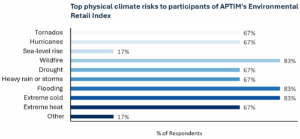
According to APTIM’s Environmental Retail Index, 100% of retailers have experienced financial loss or physical asset damage from climate-related events, with extreme cold, flooding and wildfire identified as the top three physical risks. Climate impacts to store locations are inevitable given the vast geographic footprint of most nationwide and global chains, but an area of emerging concern is climate risks to data centers, which can threaten operational continuity for retailers.
Data centers house critical enterprise information and may face increasing outages due to climate impacts. The 2025 Global Data Center Physical Risk and Adaptation Report, developed by the Cross Dependency Initiative, found that climate hazard infrastructure damage is expected to increase 256% by 2100 across more than 3,600 North American data centers.
Learn how retailers can assess their data centers’ exposure to climate-related risks and take steps to reduce them.
What Are Climate Risks to Data Centers?
The impacts of climate hazards on data centers can be severe and costly to repair. When considering the most critical risks to these facilities, leadership should evaluate the following:
- Extreme heat and limited water supplies, which can threaten the functionality of cooling mechanisms
- Flooding, which can cause power malfunctions and directly damage assets
- Smoke, which can damage sensitive equipment
- Grid failures, which can cause outages
These adverse conditions could result in direct financial losses to data center owners and critical data loss for their customers. By some estimates, a single hour of data center downtime for large retailers can result in more than $5 million of lost revenue and remedial actions.
Real-world Example: During a 2021 snowstorm in Texas, a data center serving a major big-box retailer experienced a four-day outage, even with backup generators in place. Fortunately, the company that relied on this center was able to maintain operations because of its geo-distributed database. This example highlights the importance of data center hazard mitigation and business continuity for retail operations.
How to Assess Climate Risks to Retail Data Centers and Build IT Resilience
The likelihood and potential impact of each of these hazards can be evaluated at sites nationwide using standardized climate modeling and projection data. More in-depth analyses may consider facility-specific resilience factors, such as site location, critical equipment characteristics, and potential outages.
Beyond the physical climate risks themselves, retailers should also evaluate the risk management mechanisms implemented by data center owners—particularly for cloud centers—to reduce impacts from climate hazards and threats to energy reliability. The answers to these questions can provide insight into the security of retailers’ data and support retail IT infrastructure resilience:
- Does the provider maintain sufficient cooling capacity for the local climate?
- Do they utilize backup locations in different regions?
- Do they comply with ASHRAE and/or DOE guidance on energy-efficient data center design?
APTIM’s Critical Infrastructure team helps retail clients translate complex data center vulnerabilities into actionable strategies for business continuity. Our team assesses not only site-level risks but also the resilience of surrounding energy infrastructure—including grid transmission paths, substations, and fuel supply networks—to identify points of cascading failure.
We analyze infrastructure hazard sensitivity, such as exposure to flooding, wind, heat, and wildfire, and quantify how these hazards could disrupt data availability and power continuity. The result is a data-driven understanding of how environmental and energy disruptions could affect retail operations and a clear roadmap to strengthen redundancy, enhance adaptive capacity, and protect revenue in an increasingly digital and climate-sensitive world.
How to Mitigate Data Centers’ Climate Risks for Business Continuity & Operational Resilience
In 2025, more than a dozen climate-related incidents impacting cloud computing have already been reported. The number of annual incidents is likely to increase over the next five years due to growing grid loads. Climate risk mitigation measures are more important than ever, but because facilities’ risk data tend to remain confidential, customers will likely need to do their own due diligence to plan for potential downtime, mitigation projects, and operational contingencies.
Below are a few steps to get started:
- Gather information about the data centers your company uses, including tier ranking and risk management practices where available.
- Ask facilities managers about basic energy resilience and security features at owned and third-party data centers, such as backup power supplies and/or on-site renewable energy systems.
- Initiate conversations with key stakeholders, including municipal authorities, to discuss the implementation of climate-resilient design strategies (e.g., on-site water recycling and elevating structures for flood defense).
Take the Next Step in Risk Mitigation with APTIM
Experts at APTIM have extensive experience helping clients plan for resilience before and after impacts to their data servers. Our team is eager to support your company in assessing risks from climate impacts at data centers as well as across your supply chain and facility portfolio.
If you are interested in developing a strategy for climate and operational resilience, reach out to our team at EnvironmentalRetail@APTIM.com.
Learn more about APTIM’s resilience and sustainability solutions.
Published November 2025
APTIM. In Pursuit of Better.
Connect with APTIM
Subscribe to the APTIM Xchange Newsletter
APTIM's newsletter, The APTIM Xchange, provides industry news flashes, regulatory updates, service spotlights, and topical columns from our subject matter experts.